2026-10-23 ·
How to Check for Chimney Damage After an Ohio Winter
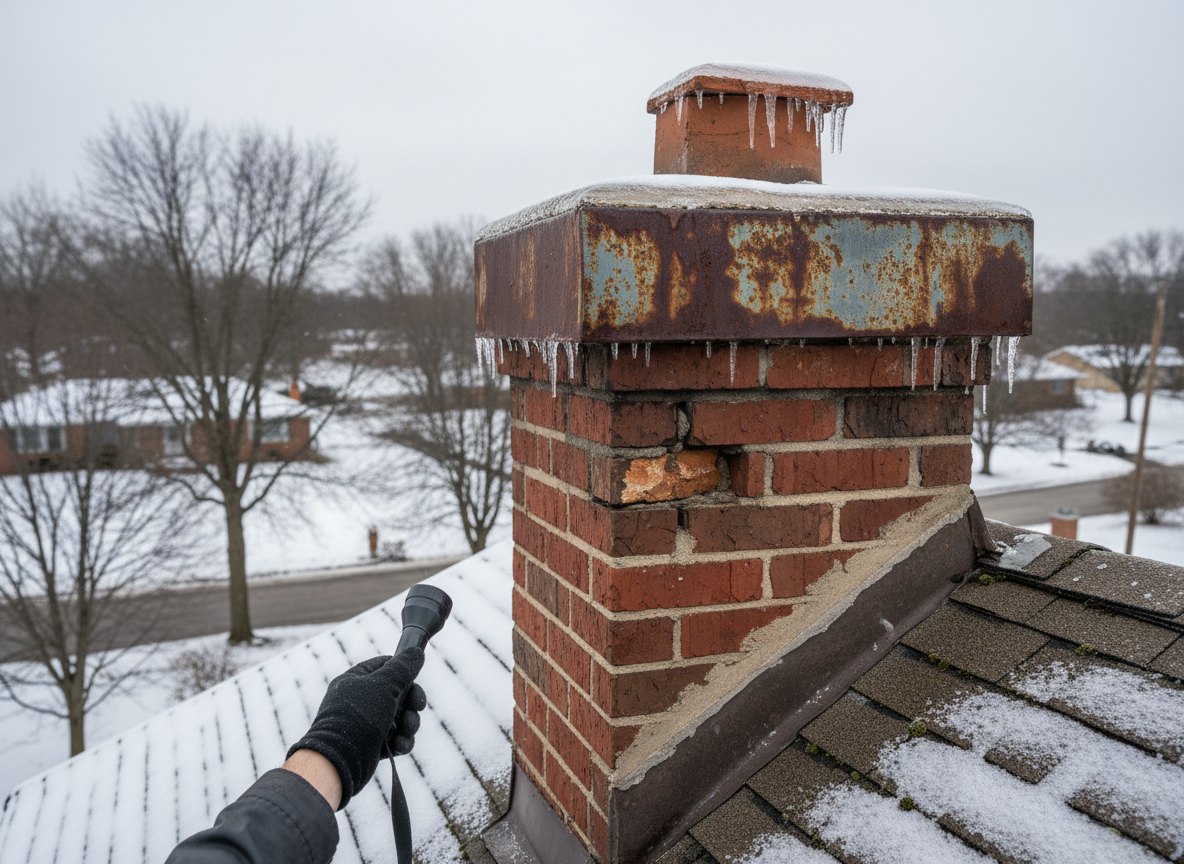
Centerville chimneys face repeated freeze-thaw cycles each winter that expand water inside mortar joints and brick faces. Begin your inspection at ground level on a clear day and look for cracks wider than 1/8 inch, missing mortar, or white efflorescence stains that signal ongoing moisture movement. Walk the full perimeter and note any leaning or separation where the chimney meets the roofline.
Examine Exterior Masonry for Winter Damage
Focus first on the south and west faces that receive the most sun and then refreeze at night. In neighborhoods such as Cornerstone and Washington Township, many 1970s and 1980s brick homes show spalling where the outer brick layer flakes away after several seasons of trapped moisture. Run your hand along joints and press gently; loose or sandy mortar indicates the need for tuckpointing. Check the crown for hairline cracks that allow water to pool and seep downward into the flue.
Look for vegetation growing from joints or the crown, a common sight after heavy snowmelt in Miamisburg and Woodbourne. These roots widen gaps further and pull additional moisture into the structure. Document every location with photos and measurements so you can track changes next season.
Inspect the Chimney Cap, Flashing, and Crown
Climb safely or use binoculars to view the cap and flashing. Ohio winters often leave metal flashing lifted or sealant cracked where ice dams formed along the roof-chimney intersection. Missing or loose cap fasteners let rain and snow enter the flue directly. In older Centerville homes, the original crown may have settled, creating a low spot that holds water against the brick.
Run a garden hose on the crown for two minutes and watch for water tracking down the exterior or inside the fireplace. Persistent leaks after this test point to crown or flashing failure that chimney crown repair can address before spring rains arrive.
Check the Flue and Interior for Hidden Issues
Open the damper and shine a bright light upward. Look for white staining on the flue tiles, which shows water has penetrated the chimney stack during winter. Soot streaks running down the interior walls often indicate the liner has shifted or cracked from ice expansion. In homes along The Trails or Crestview, closed fireplaces may hide water that collected behind the damper and damaged the smoke chamber.
Feel the firebox walls for damp spots or a musty odor that lingers after the heating season. These signs usually appear first in the lower third of the flue where meltwater pools. Schedule a chimney inspection service if you find any of these interior markers.
Assess Surrounding Roof and Attic Conditions
Walk the roof if it is dry and examine the step flashing and counter flashing where the chimney penetrates. Ice movement during January and February frequently tears sealant or bends metal away from the brick. In the attic, check insulation around the chimney chase for dark water rings or compressed areas that no longer insulate properly.