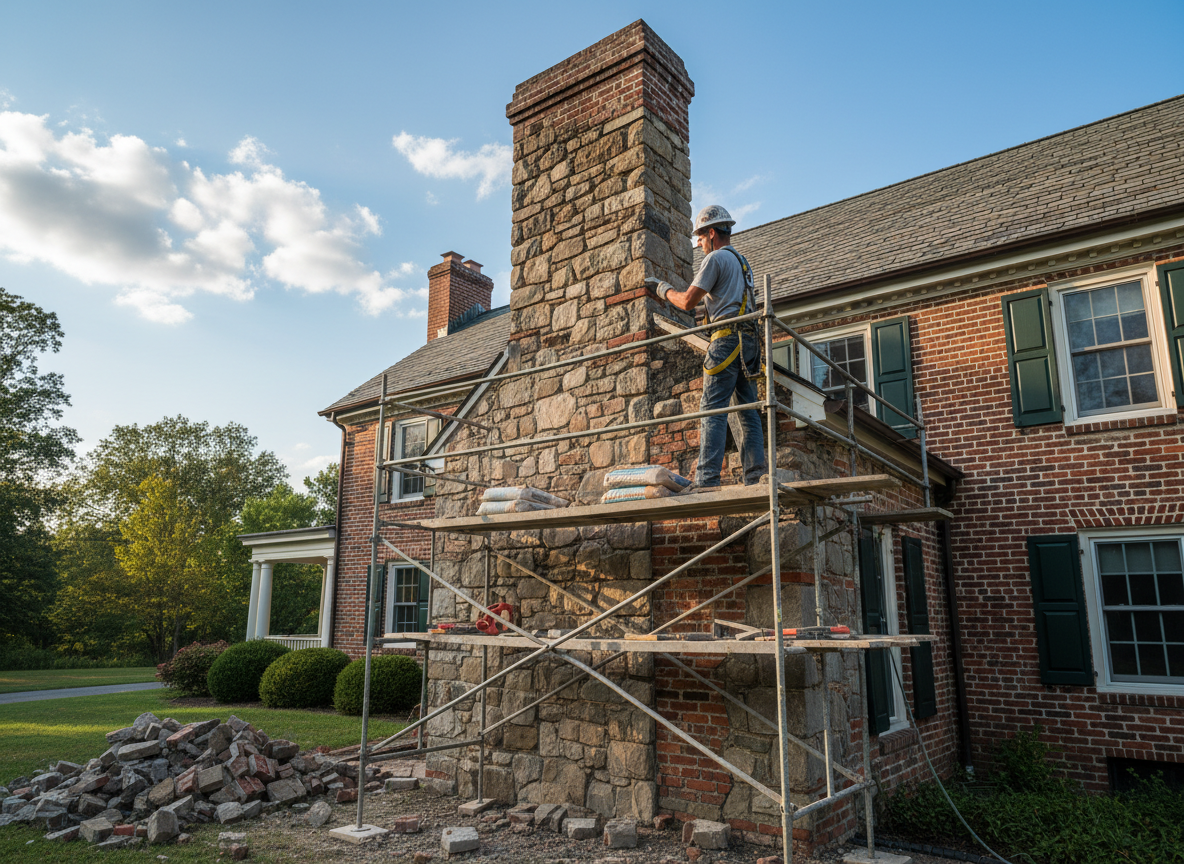
Centerville homes built from the 1950s through the 1980s often feature brick chimneys tied into the original masonry foundation. Freeze-thaw cycles common in Montgomery County push moisture into hairline mortar joints, causing spalling and loose bricks by late winter. Homeowners in neighborhoods near the Centerville Historic District notice water stains on interior walls first because the chimneys share walls with living spaces. We match original brick and type-N mortar to maintain structural integrity without introducing modern sealers that trap moisture behind the face.
Access on sloped lots around Yankee Street or near the I-675 corridor changes the job. Scaffolding must be set on uneven ground while keeping the flue open for gas appliances still in use. We remove only the damaged courses, install new flashing where the chimney meets the roof deck, and repoint the full height when the crown has already failed. Skipping the crown repair leads to repeated water entry the following season.
Code compliance in Centerville requires maintaining proper clearance from combustible framing when rebuilding above the roofline. We use stainless-steel ties every 16 inches and ensure the flue liner remains undamaged during tuckpointing. Homeowners frequently discover that a single loose brick has allowed creosote staining down the chase once we open the wall.
Technician insight
In Centerville the thing that catches most people out with chimney masonry repair is how the freeze-thaw cycles on older brick homes around the downtown square push moisture behind the face brick; once the crown lets water in, the damage travels down the entire flue chase before any interior staining shows up.
Historic District Chimney Rebuild
A 1968 brick home near Main Street showed interior water marks after a January thaw. We found failed mortar and a cracked crown allowing water to run down the flue. We rebuilt the top four courses, installed new flashing, and repointed the full height. The homeowner reported no further staining the following spring.
How it works
- 1
Site Assessment
We inspect the chimney from roof to cleanout, checking mortar joints, crown condition, and flashing integration with the existing roof.
- 2
Material Matching
Original brick and mortar type are identified so repairs blend with the 1960s-1980s housing stock found throughout Centerville.
- 3
Dismantle and Rebuild
Damaged sections are removed course by course, new mortar is placed, and stainless ties are installed to meet current clearance rules.
- 4
Final Waterproofing
The crown is rebuilt with a proper slope and new step flashing is installed where the chimney meets the roof deck.
Pricing
Cost depends on chimney height, number of courses requiring rebuild, and roof access difficulty.