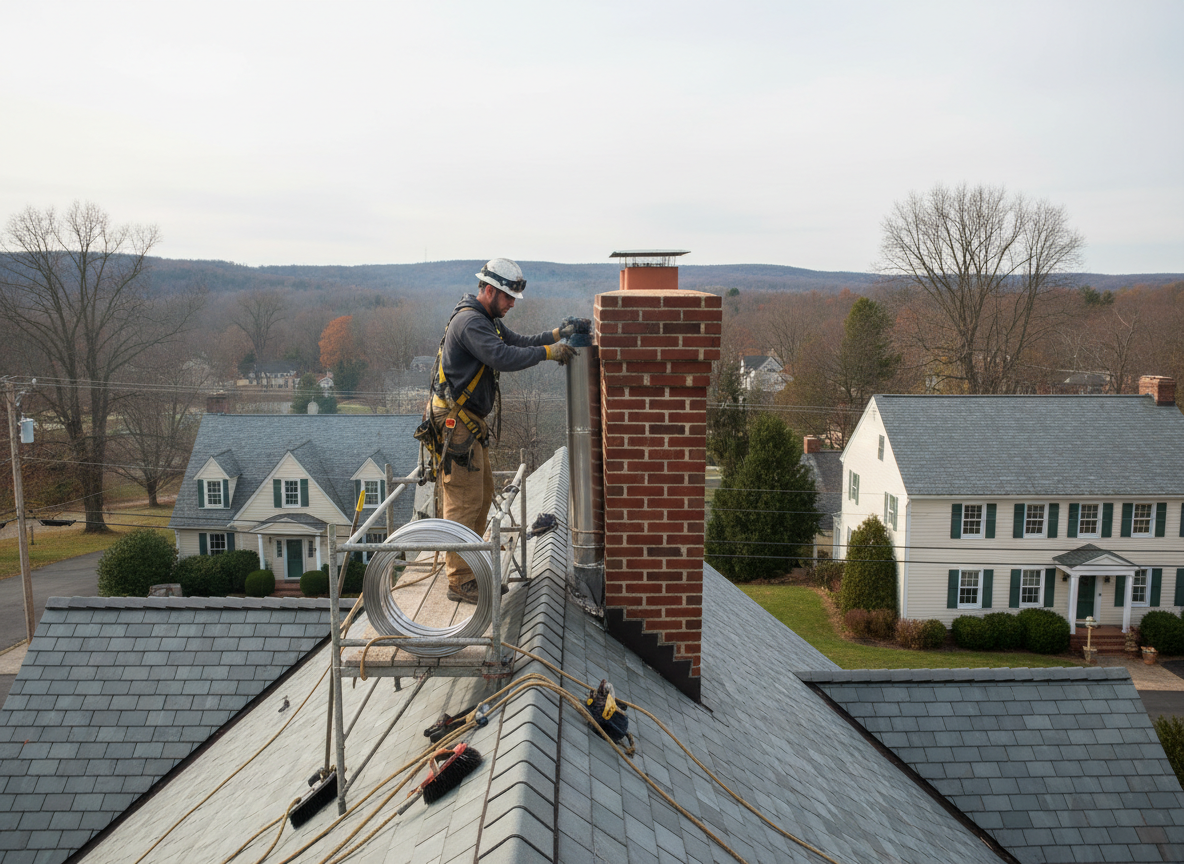
Centerville's older brick homes often have original clay flues that crack from repeated winter freeze-thaw cycles and age-related settling. Relining with stainless steel or cast-in-place materials seals these fractures, prevents creosote buildup, and restores proper draft without full chimney demolition. Homeowners in neighborhoods near the Centerville-Washington Township border frequently discover liner failures during annual inspections after noticing water stains or slow smoke draw.
Edge cases common here include chimneys serving multiple appliances or those with offsets that complicate liner insertion. Proper sizing accounts for the specific appliance venting requirements and local building code updates that mandate UL-listed liners in Montgomery County retrofits. Skipping a thorough camera inspection before lining can leave hidden obstructions that cause future carbon monoxide risks or poor performance.
Relining work in the Centerville area must also address roof pitch and flashing integration to handle heavy spring rains and ice dams. Technicians measure flue height and diameter on site, then select materials that resist corrosion from the region's variable humidity and wood-burning habits. This approach avoids the common mistake of using undersized liners that restrict airflow in two-story homes typical to the area.
Technician insight
In Centerville, the thing that catches most people out with chimney relining is how freeze-thaw damage in the older brick homes around Cornerstone North Blvd creates hidden flue gaps that only show up after the first hard winter. Homeowners often skip the camera step and end up with liners that don't seat properly because of settled mortar joints typical in Montgomery County stock.
Two-Story Home Near Yankee Park
A Centerville homeowner reported slow draft and water marks on the mantel. Camera inspection revealed multiple clay flue cracks from repeated freeze cycles. We installed a stainless steel liner sized for the wood stove, sealed the top termination, and restored full draft without disturbing the existing brick exterior.
How it works
- 1
Initial Camera Inspection
A technician scopes the full flue length from the Centerville address to identify cracks, offsets, and creosote deposits.
- 2
Liner Selection and Sizing
Measurements determine the correct stainless or cast-in-place liner diameter based on appliance type and local venting codes.
- 3
Liner Installation
The new liner is inserted and secured, with insulation added where needed to maintain draft in cold Ohio winters.
- 4
Final Testing and Cleanup
Draft and safety tests confirm proper function before the site is restored and the homeowner receives usage guidance.
Pricing
Cost depends on flue height, diameter, and whether offsets or multiple appliances are involved.