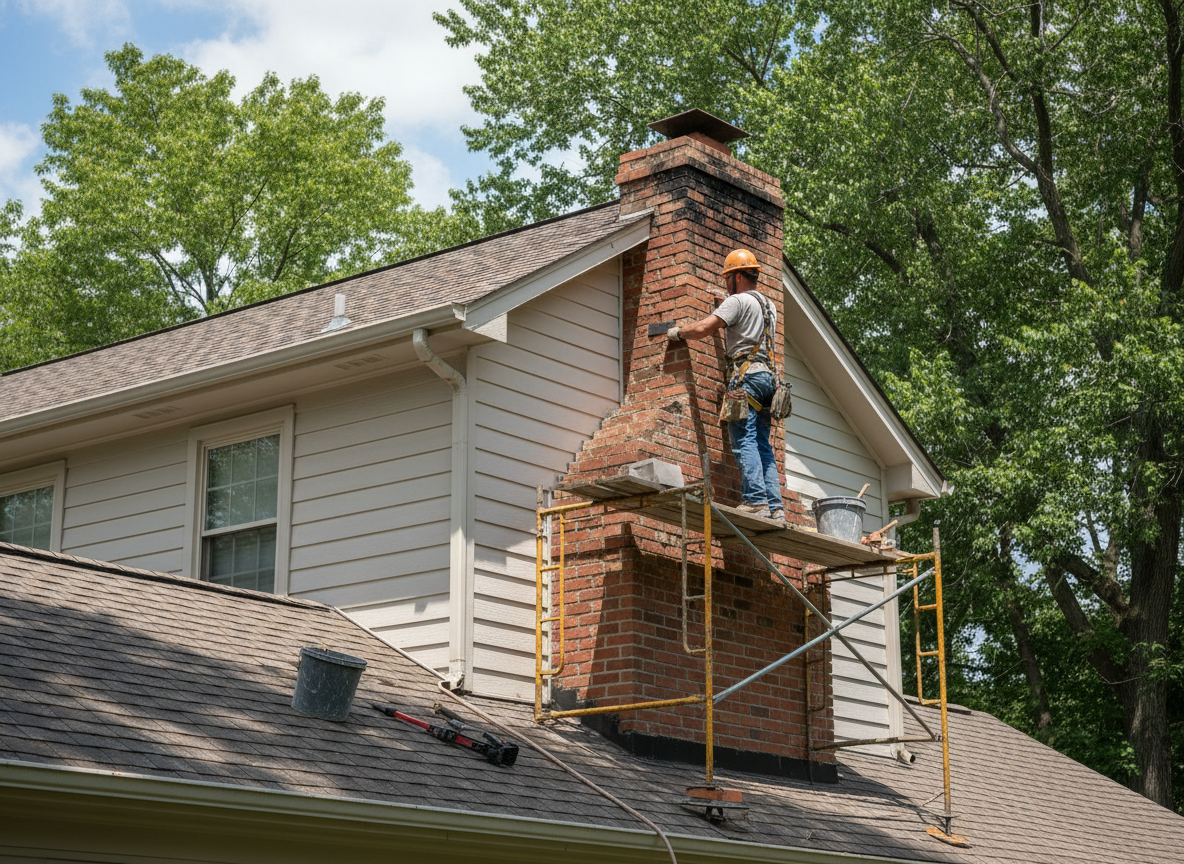
Centerville homes built from the 1960s through the 1990s often feature brick chimneys tied into the original masonry foundation. Freeze-thaw cycles in Montgomery County push moisture into mortar joints, causing spalling and loose bricks that allow water to reach the flue liner. Homeowners notice white efflorescence or draft problems first, then discover interior ceiling stains once water tracks down the chase. Repair starts with a top-down inspection of crown, flashing and brick faces rather than a quick patch at the roof line.
When replacing individual bricks, matching the original modular size and color prevents visible patchwork that stands out on two-story Centerville colonials. We remove only the deteriorated units, clean the cavity, and bed new bricks in Type N mortar formulated for exterior exposure. Flashing integration at the roof plane receives extra attention because many homes here have asphalt shingles that have been replaced without resetting step flashing against the chimney. Skipping that step guarantees leaks return within two seasons.
Code requirements in the Centerville area reference the current International Residential Code for chimney height above the roof plane and spark arrestor installation. We verify clearance from nearby tree canopies common in the Washington Township pockets surrounding the city, since overhanging limbs trap moisture against the masonry and accelerate deterioration. Every repair includes a written report noting liner condition so homeowners know whether the next step is relining or full rebuild.
Technician insight
In Centerville, the thing that catches most people out with brick chimney repair is how the 1970s split-levels around Cornerstone Boulevard and the Washington Township pockets have chimneys that sit right against the roof slope with minimal cricket. Snow sits there all winter, melts, and drives water straight into the mortar. Homeowners think a new crown fixes it, but the real fix is often resetting the step flashing that got buried under the second roof layer.
Loose Bricks and Ceiling Stains on a 1978 Centerville Split-Level
Water stains appeared on the second-floor ceiling after a heavy January thaw. Inspection showed spalled bricks and failed mortar on the north face plus step flashing that had been covered by a new shingle layer. We removed twelve deteriorated bricks, repointed the joint, reset the flashing, and rebuilt the crown. No further leaks occurred the following winter.
How it works
- 1
Initial Inspection
We examine the crown, mortar joints, flashing and interior chase from the roof and attic to map all water entry points.
- 2
Masonry Removal
Deteriorated bricks and mortar are cut out without disturbing sound surrounding masonry or the flue liner.
- 3
Brick and Mortar Replacement
New bricks are set in appropriate mortar, tooled to match existing joints, and allowed to cure before weather exposure.
- 4
Flashing and Crown Restoration
Step flashing is reset or replaced and the crown is sealed or rebuilt to shed water away from the chimney.
Pricing
Cost depends on number of bricks replaced, height of the chimney, and whether flashing or crown work is required; we provide an upfront quote after inspection.