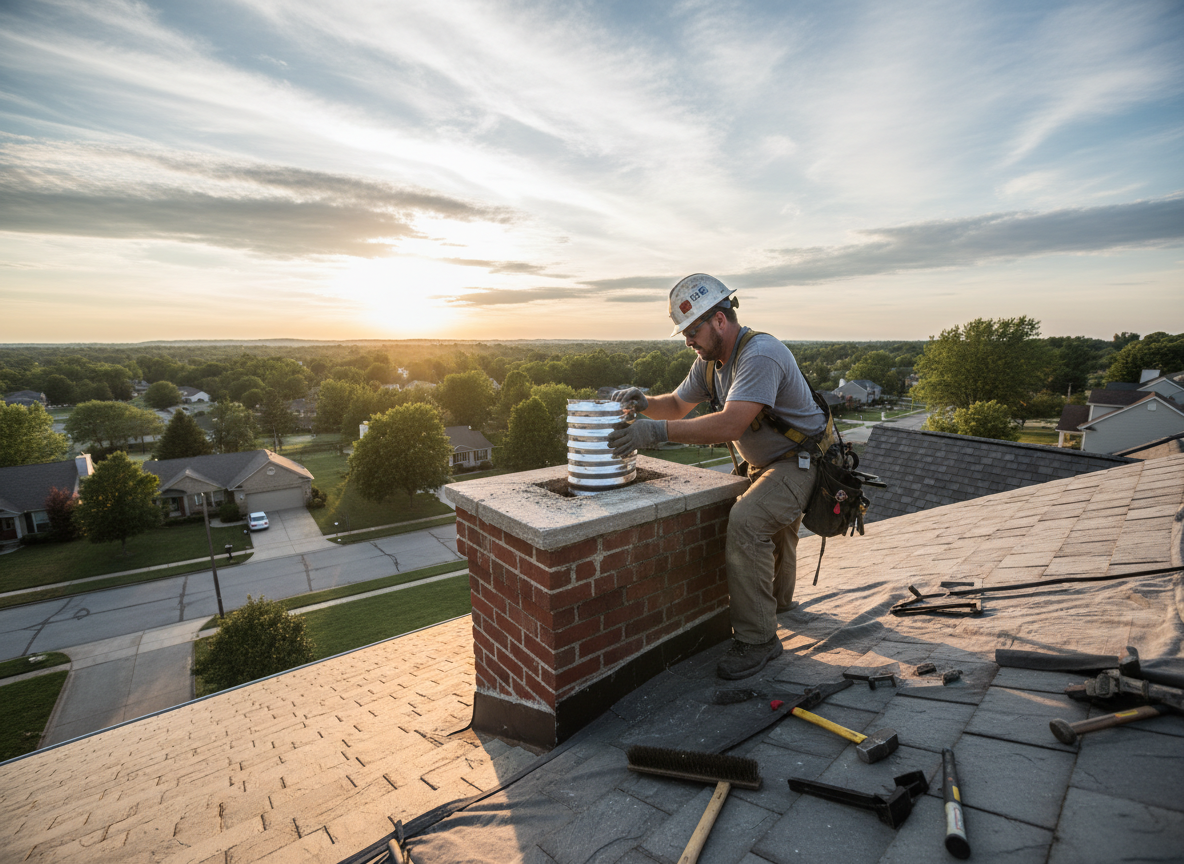
Centerville homes built from the 1960s onward often feature masonry chimneys with clay or metal liners that degrade from repeated freeze-thaw cycles and acidic flue gases. When a liner cracks or pits, combustion byproducts can leak into living spaces or accelerate brick spalling on the exterior. Axis Wrench assesses liner condition through camera inspection before selecting replacement materials that match the chimney's flue size and fuel type.
Repair work in the Centerville area frequently involves navigating tight attic access and older roof pitches that complicate liner insertion. Stainless steel or cast-in-place liners are chosen based on whether the home uses a wood-burning fireplace or gas insert. Proper sealing at the top and bottom prevents water intrusion that otherwise travels down the flue and damages ceilings during heavy spring rains.
Local building practices in Montgomery County require that liner repairs maintain proper clearances and draft performance. Technicians verify that the new liner does not reduce flue capacity below code minimums for the appliance served. Homeowners notice improved draft and reduced creosote buildup once the repair is complete, especially after the first winter season.
Edge cases include chimneys serving multiple appliances where a single liner failure affects both the furnace and fireplace. In these situations the entire system must be evaluated to avoid backdrafting risks during cold snaps when indoor-outdoor temperature differentials are greatest.
Technician insight
In Centerville, the thing that catches most people out with chimney liner repair is how quickly water from melting snow on the roof finds its way past a cracked clay liner and saturates the attic insulation in these 1970s and 1980s ranch homes. The freeze-thaw cycles here turn a small flue crack into ceiling damage before homeowners notice any odor.
Corroded Liner in South Centerville Ranch
A homeowner reported intermittent smoke smell on windy days. Inspection revealed a pitted stainless liner installed in the 1990s that had failed at the mid-flue joint. The crew removed the old liner through the roof, installed a new continuous stainless insert sized for the gas furnace, and sealed the crown. Draft improved and the odor disappeared.
How it works
- 1
Initial Camera Inspection
A technician scopes the full length of the flue to locate cracks, corrosion, or blockages while documenting conditions for the homeowner.
- 2
Material Selection and Access Planning
The crew determines whether a stainless steel insert or cast-in-place liner is appropriate and plans roof or attic access routes typical for Centerville split-level homes.
- 3
Old Liner Removal and Cleaning
Damaged sections are extracted and the chimney is cleaned to ensure the new liner seats correctly without gaps.
- 4
New Liner Installation and Testing
The replacement liner is installed, sealed at both ends, and the system is tested for draft and gas tightness before final cleanup.
Pricing
Upfront quotes provided after inspection; final cost varies with liner length, material, and access difficulty.