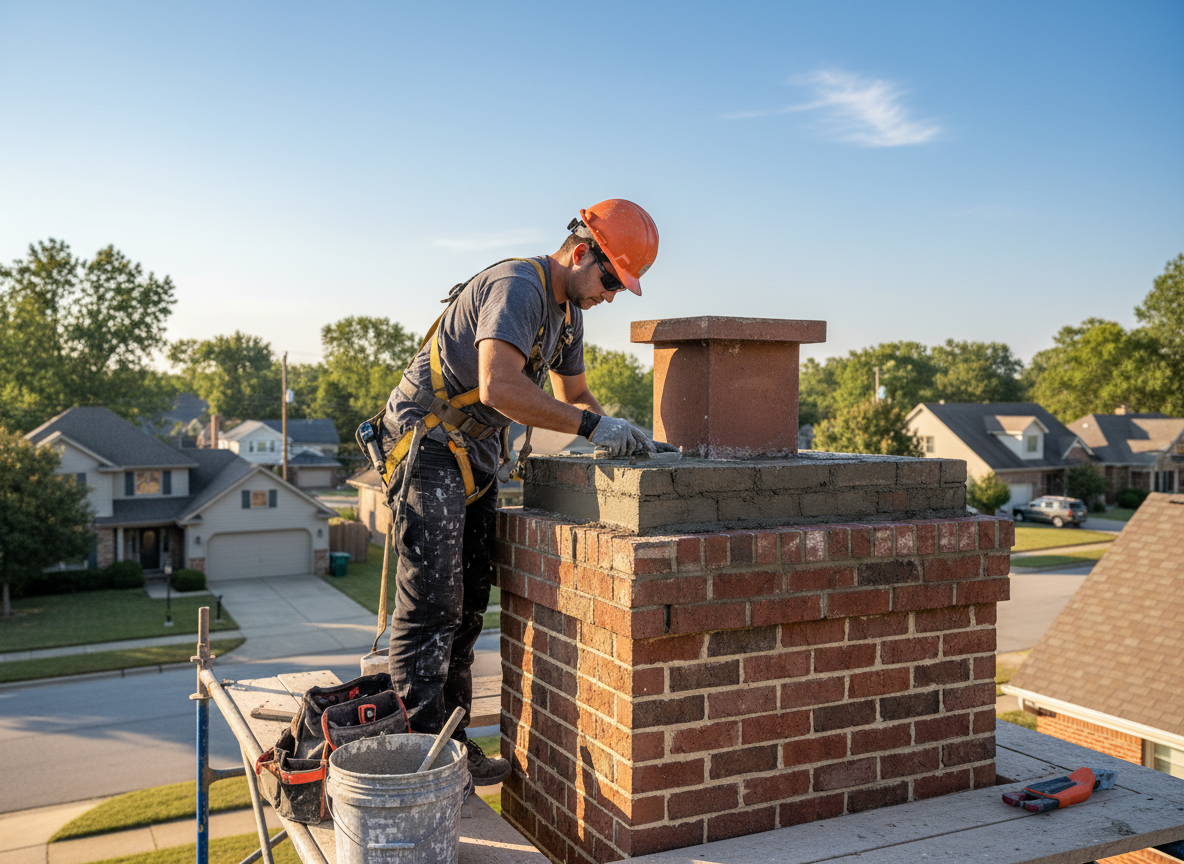
Centerville homes from the 1960s through 1980s often feature masonry chimneys with original mortar that has begun to crumble after decades of exposure. Freeze-thaw cycles common in the Centerville area repeatedly expand and contract moisture trapped in the joints, causing bricks to loosen and water to migrate toward the flue. Proper repair requires removing the deteriorated mortar to a consistent depth, then installing new mortar matched in composition and color so the chimney does not develop new stress points. Homeowners sometimes attempt surface patching with caulk or incompatible mortar, which traps moisture and accelerates further damage along the crown and flashing lines.
When we arrive at a property near Cornerstone North Boulevard or along larger streets in southern Centerville, the first step is checking how far the deterioration extends around the entire stack, including areas hidden by roofing. We use type N mortar for most residential work here because it balances strength with flexibility needed for older brick. Edge cases include chimneys that have settled slightly on the clay-heavy soils common in this part of Montgomery County, requiring additional pinning before repointing can hold. We also inspect the crown and any terra-cotta flue tiles that may have shifted, since mortar failure at the top frequently allows water to run down inside the flue and damage interior walls.
Code compliance in Centerville requires that repaired chimneys maintain proper clearances and that any spark arrestors or caps remain functional after work. We never cover existing cracks with new mortar without addressing the underlying movement, and we advise against DIY tuckpointing on two-story chimneys where ladder access and consistent joint depth are difficult to maintain. After repair we recommend annual inspections each fall before the first hard freeze, especially for homes with wood-burning fireplaces that produce acidic flue gases that further attack mortar joints.
Seasonal Timing for Centerville Chimney Mortar Work
Spring and early fall offer the best windows for mortar repair in the Centerville area because temperatures stay above 40 degrees long enough for proper curing. Winter repairs are possible only with enclosures and heat, which increases cost and is reserved for active leaks threatening interior finishes.
Technician insight
In Centerville, the thing that catches most people out with chimney mortar repair is how quickly the north-facing joints on split-level homes along streets like Clyo Road fail after just two or three hard winters because the original 1970s mortar was never meant for repeated freeze-thaw exposure.
Loose Joints on a Centerville Chimney
A homeowner noticed white powder on the fireplace hearth after heavy rain. We found eroded mortar and hairline cracks on the west side of the stack where runoff pooled. After cutting out the failed joints and repointing with matching mortar, water no longer entered the flue and the interior staining stopped.
How it works
- 1
Site Assessment
We examine every joint from roofline to crown, noting settlement, water staining, and loose bricks on Centerville chimneys.
- 2
Mortar Removal
Old mortar is cut out to a uniform depth without damaging brick edges, focusing on north and west faces that take the worst weather.
- 3
Joint Preparation
Joints are cleaned of dust and dampened so new mortar bonds properly in the variable humidity of the Centerville area.
- 4
Repointing
Fresh mortar is packed in layers and tooled to match the original profile, then protected while it cures.
- 5
Final Inspection
We verify water shedding at the crown and flashing, then document the completed work for the homeowner.
Pricing
Cost depends on chimney height, extent of joint damage, and whether scaffolding or roof protection is required.