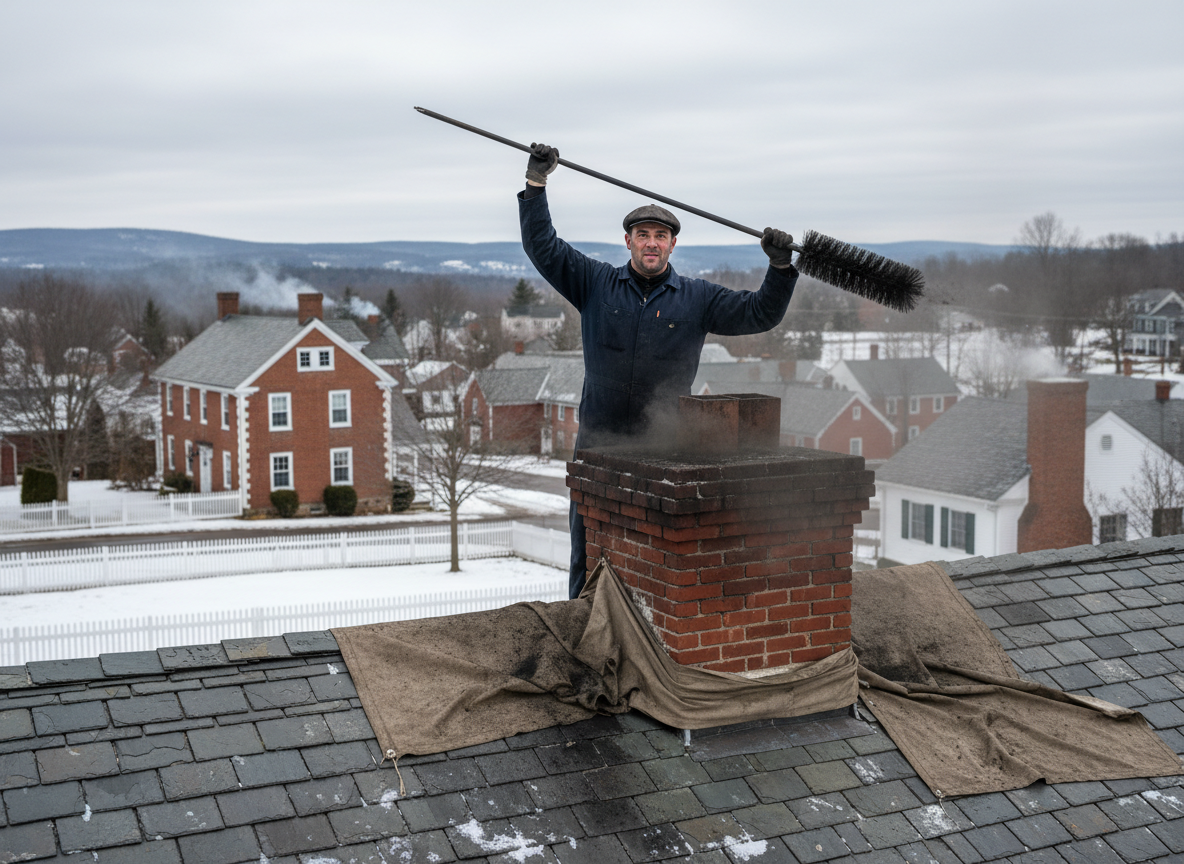
Centerville homes built from the 1960s onward often feature masonry chimneys tied to fireplaces or wood stoves that see heavy use once winter temperatures drop below freezing. Over time, incomplete combustion leaves layers of creosote that harden on flue walls, narrowing the draft and raising the risk of chimney fires. A proper sweep removes this buildup plus any bird nests or loose mortar that accumulate during the freeze-thaw cycles common in southwest Ohio.
Sweep crews working from 5300 Cornerstone N Blvd start at the top, using rods and brushes sized to the flue rather than generic tools that can miss corners in older rectangular chimneys. They check for cracks where water from spring rains has seeped behind the crown, a frequent issue on Centerville’s clay-heavy soils that shift slightly each year. Homeowners in Kettering and Miamisburg report the same pattern: one missed season of cleaning turns a small draft problem into a full liner replacement.
After the sweep, the crew inspects the smoke chamber and damper for proper sealing so cold air does not pour into living spaces during the long heating season. They also note any offset flues common in split-level homes throughout the Centerville area, because those angles trap debris that standard brushes cannot reach without extra extensions.
Residents along Bigger Road and near the Centerville Library know that waiting until the first cold snap often means scheduling delays; scheduling the sweep in early fall keeps the flue clear before the first measurable snow.
Technician insight
In Centerville, the thing that catches most people out with chimney sweep is the heavy creosote that builds up fast in the older brick chimneys on split-level homes along Bigger Road. Those flues have slight offsets that trap debris during our long winters, and one missed season turns a quick sweep into a liner job because water from spring rains has already started eating the mortar.
Hidden offset flue in a 1970s split-level
Homeowner on Stoney Creek Drive noticed slow draft after burning oak all winter. We found two inches of hardened creosote above the offset in the flue. Rods with extra extensions cleared the section; a follow-up camera check confirmed the liner was still sound. Draft returned to normal and the family resumed use without further repair.
How it works
- 1
Schedule and arrive
Homeowner calls or texts 24/7; technician confirms access and arrives with rods, brushes, and drop cloths sized for the chimney.
- 2
Protect the interior
Furniture and flooring are covered; the fireplace opening is sealed with plastic and tape to contain soot.
- 3
Clean from the top down
Technician works from the roof, running sized brushes through each flue section until no more creosote or debris falls.
- 4
Inspect and report
Flue, smoke chamber, and damper are checked for cracks, nesting, or water damage; findings are noted for the homeowner.
- 5
Final cleanup
All debris is removed, interior protection is taken down, and the work area is left clean before departure.
Pricing
Cost depends on chimney height, number of flues, and amount of buildup; call for an upfront quote before work begins.