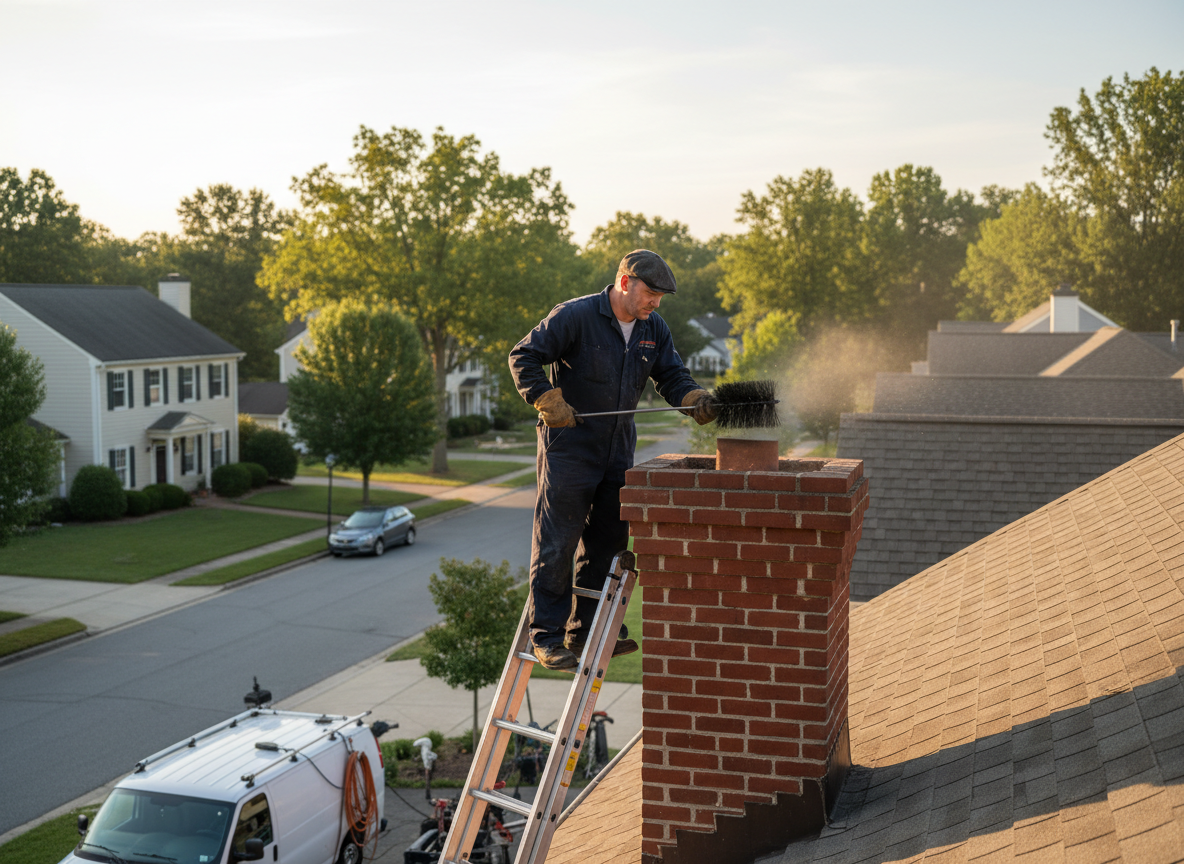
Centerville sits in Montgomery County with many split-level and ranch homes built between the 1960s and 1980s that still rely on brick chimneys tied into wood-burning fireplaces. These flues collect dense creosote layers when residents burn oak or cherry through the long heating season, especially when damper seals weaken from freeze-thaw cycles. A proper sweep requires staged brush sizes to reach the smoke chamber without cracking the terra-cotta flue tiles common in this housing stock.
Homeowners near the intersection of I-675 and State Route 48 often notice draft issues after heavy snowfall because melting snow enters through uncapped crowns and mixes with soot to form acidic deposits. Skipping the smoke chamber and damper area during cleaning leaves the primary restriction untouched, which is why we always drop a mirror into the firebox to confirm clearance before finishing. This step prevents callbacks that occur when only the straight flue is addressed.
Dayton-area building practices from earlier decades left many chimneys with single-wall connectors that run close to framing, so we check for clearance violations during every visit. Removing hardened glaze creosote here demands rotary tools rather than standard brushes, and the work takes longer on two-story homes where ladder setup on sloped yards adds time. We always leave the firebox and hearth clean so the next fire starts without tracking soot through the living space.
Technician insight
In Centerville, the thing that catches most people out with chimney sweep near me is how quickly the freeze-thaw cycles around the Great Miami River valley open hairline cracks in the crown, letting water mix with creosote and turn a routine cleaning into a multi-visit repair once the flue starts spalling.
Hidden Restriction in a 1972 Ranch
A Centerville homeowner on Whipp Road called after repeated smoke spillage. We found the smoke chamber packed with third-stage creosote that standard brushes had missed on prior visits. After rotary cleaning and crown sealing we restored full draft and the fireplace has run cleanly through the following two winters.
How it works
- 1
Initial Assessment
We inspect the chimney exterior, crown, and flashing from the roofline down to the firebox, noting any tile damage or creosote stage before starting.
- 2
Protective Setup
Drop cloths and negative-air containment cover the hearth and surrounding floors to keep soot from migrating into finished rooms.
- 3
Mechanical Cleaning
Rotary brushes and specialized rods remove creosote and debris from the flue, smoke chamber, and damper in multiple passes sized to the chimney diameter.
- 4
Final Verification
A mirror and light check confirms the flue is clear, followed by removal of all containment materials and a walkthrough with the homeowner.
Pricing
Upfront quotes reflect chimney height, number of flues, and creosote density; most Centerville single-flue jobs fall in a consistent range once we see the setup.