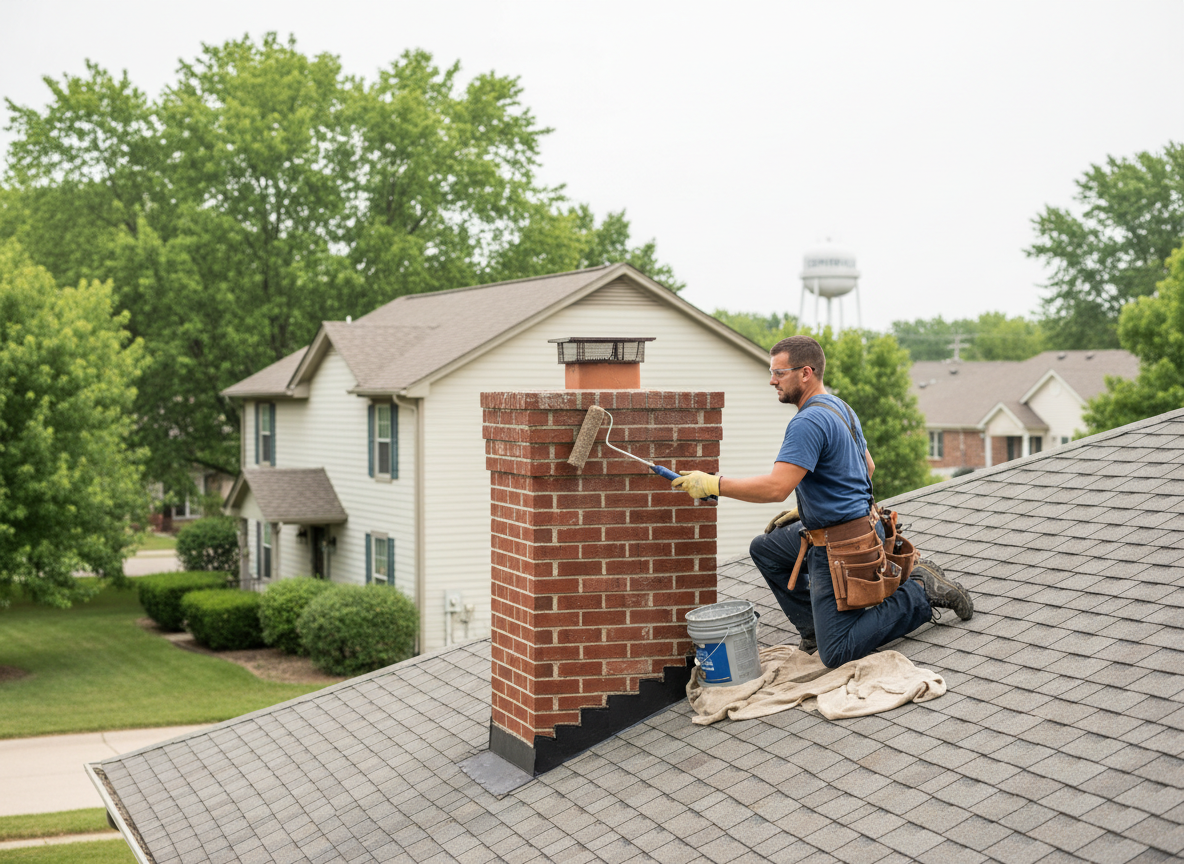
Centerville sits in Montgomery County where brick and stone chimneys on 1960s-1980s homes take repeated hits from freeze-thaw cycles and heavy spring rains. Water enters through cracked crowns, open mortar joints, and failed flashing, then expands when it freezes, loosening bricks and sending stains down interior walls. Proper waterproofing starts with a full inspection of the crown, flue tile, and step flashing before any coating goes on.
We use breathable silane-siloxane sealers that penetrate masonry without trapping moisture inside the flue. These products handle the clay-heavy soils around Centerville that hold water against foundations and wick upward into chimney bases. Application happens only on dry, above-40-degree days so the sealer cures before the next cold snap hits.
Edge cases we see often include shared chimneys on duplexes near the Dayton Mall corridor and chimneys with terra-cotta caps that have shifted from wind-driven rain. We never coat over active leaks or damaged liners; those must be fixed first or the sealer simply hides the problem until it worsens.
Seasonal Timing
Waterproofing performed in early fall gives the coating time to cure before Centerville's first hard freeze. Waiting until November often means rescheduling when temperatures drop below the manufacturer's minimum.
Technician insight
In Centerville, the thing that catches most people out with chimney waterproofing is how the heavy clay soil around homes near Yankee and Normandy keeps moisture against the foundation all winter, pushing water up into the chimney base if the lower flashing isn't sealed at the same time as the crown.
Water Stains After Spring Rains
A Centerville homeowner near the library reported interior stains following repeated March downpours. Inspection showed open mortar at the roofline and failed step flashing allowing water into the flue. We repaired the joints, replaced the flashing, then applied two coats of breathable sealer. No further moisture appeared through the next winter.
How it works
- 1
Site Inspection
We examine the crown, mortar joints, flashing, and surrounding roof deck for existing water paths specific to Centerville construction.
- 2
Surface Preparation
Loose debris and efflorescence are removed so the sealer bonds directly to sound masonry.
- 3
Sealer Application
Two coats of breathable masonry sealer are applied by brush and sprayer, paying special attention to the crown and step flashing transitions.
- 4
Final Check
We verify coverage and return after the first rain to confirm no new moisture intrusion.
Pricing
Pricing varies by chimney height, access, and existing damage; we provide upfront quotes after inspection.