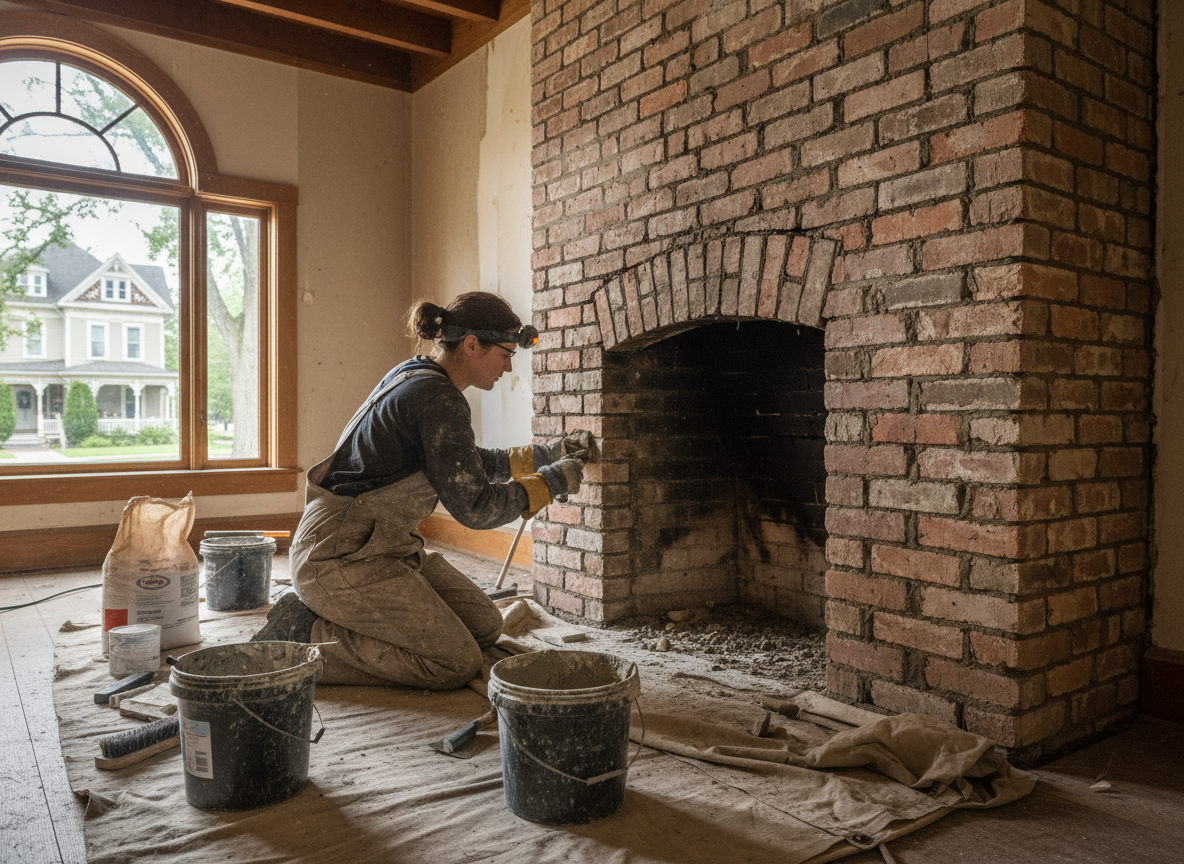
Centerville homes, especially those built in the 1960s through 1980s near the intersection of Route 48 and Feedwire Road, often feature masonry fireplaces with single-wall clay liners that crack under repeated freeze-thaw cycles. Winter temperatures that swing from above freezing to well below zero allow moisture to enter through deteriorated crown caps or missing flashing, then expand inside the flue. This leads to spalling brick, loose mortar joints, and water staining on interior walls that homeowners notice only after the first heavy snowmelt.
When restoring a fireplace we first map the entire chimney chase from the smoke chamber to the roof termination. In many two-story Centerville properties the chase passes through finished attics where insulation has settled, creating cold spots that promote creosote condensation. We remove failing parging, install a stainless-steel liner sized to the appliance, and repoint with type N mortar matched to the original brick. Edge cases include shared chimneys between attached units where one owner’s wood-burning habits affect the neighbor’s draft, requiring coordination to avoid code violations during the repair.
Homeowners frequently overlook the hearth extension and firebox floor. In older Centerville construction the concrete hearth often sits directly on a wood subfloor with minimal clearance, so we check for charring and install a new concrete or refractory panel when needed. Proper restoration also includes rebuilding the smoke shelf to the correct angle so smoke does not roll back into the room during high winds common along the Great Miami River valley.
Seasonal Guidance
Late fall is the practical window for fireplace restoration in Centerville because temperatures still allow mortar to cure before sustained freezes arrive. Waiting until January often means working around snow-covered roofs and scheduling delays when multiple homes experience the same water-intrusion problems after a January thaw.
Technician insight
In Centerville, the thing that catches most people out with fireplace restoration is water that enters through the crown and travels down the outside of the clay liner for years before showing up as stains inside the living room. Homes along the older sections near Yankee Street and the golf course sit on slightly higher ground with more wind exposure, so the flashing details around the roof penetration matter more than most owners realize.
Fireplace Restoration After Ice-Dam Leak
A Centerville homeowner noticed water stains on the family-room wall after a January thaw. We traced the leak to a cracked crown and deteriorated flashing on a two-story chimney. The clay liner had spalled in three sections, allowing water to reach the smoke chamber. We removed the damaged liner, installed a new stainless-steel flue, rebuilt the crown with a proper pitch, and repointed the visible brick. The homeowner reported no further staining after the next freeze-thaw cycle.
How it works
- 1
Initial Inspection
We examine the firebox, smoke chamber, flue, crown, and flashing from both inside and on the roof to identify water entry points and structural damage.
- 2
Material Removal
Failed mortar, damaged liners, and deteriorated brick are carefully removed without disturbing sound masonry in the surrounding chase.
- 3
Liner and Repair Installation
A new stainless-steel liner is fitted, mortar joints are repointed, and the smoke shelf is rebuilt to restore proper draft.
- 4
Final Testing and Cleanup
We perform a smoke test, verify clearance to combustibles, and clean all work areas before leaving the site.
Pricing
Cost depends on chimney height, liner length, extent of brick and mortar damage, and whether the home has a single or double flue.