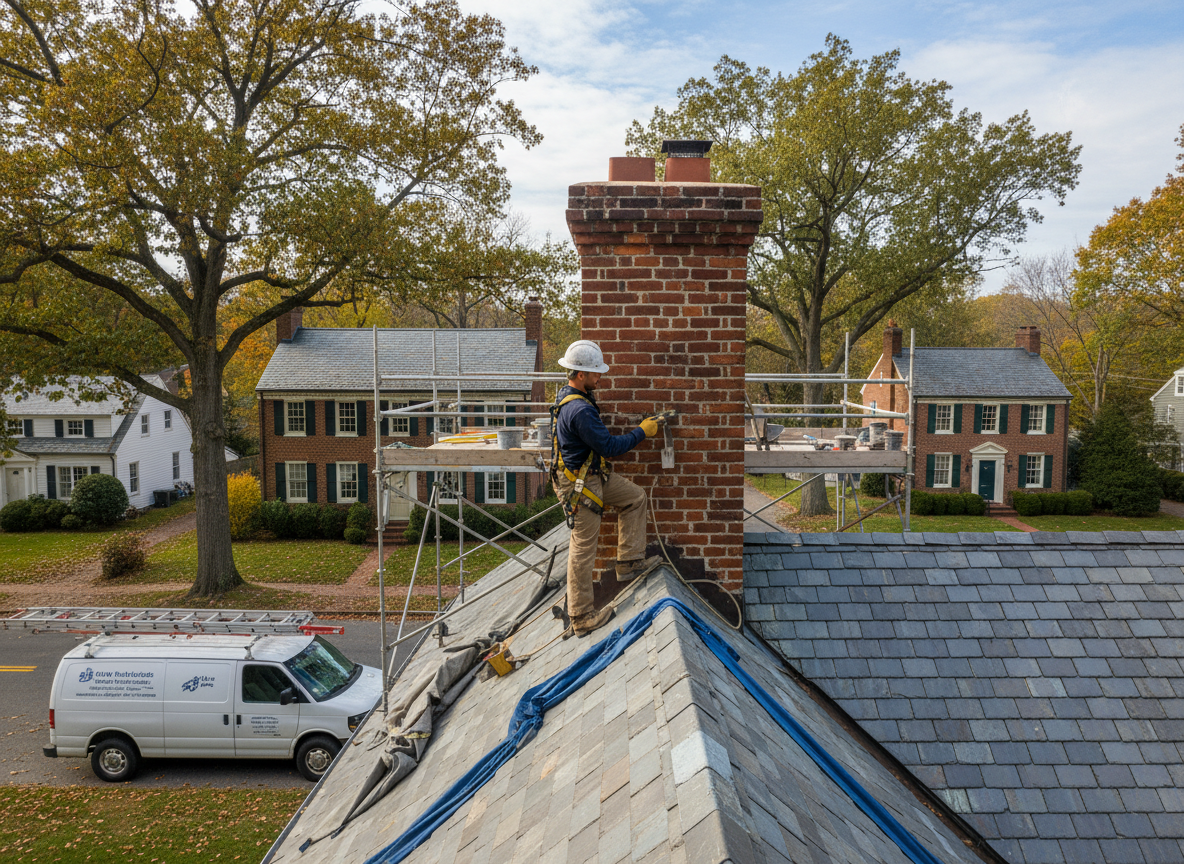
Centerville homes built from the 1960s through the 1990s often feature masonry chimneys tied into the original brick or stone exteriors. Freeze-thaw cycles common in the Dayton region push moisture into mortar joints and flue liners, creating hairline cracks that widen over successive winters. When these cracks allow water to reach the wood framing or attic insulation, homeowners notice staining on interior ceilings before any draft problems appear. Axis Wrench technicians inspect both the exterior crown and interior flue surfaces during every service call to catch deterioration before it reaches the living space.
Flashing details around the chimney where it penetrates the roof are another frequent failure point in Centerville. Many roofs in the area use asphalt shingles that have been replaced once or twice, yet the original step flashing was never updated. When the flashing lifts or corrodes, runoff travels behind the masonry and saturates the sheathing. Repair work here requires removing several courses of shingles, installing new copper or stainless step flashing, and resealing the counter flashing into the mortar joints so the assembly sheds water even during heavy spring rains.
Code requirements in Montgomery County call for proper clearances between the chimney and combustible framing, plus a lined flue for any fuel-burning appliance. Older chimneys that were never lined or that received unlined repairs years ago now violate current standards. Axis Wrench brings the chimney into compliance by installing a stainless-steel liner sized to the appliance, then verifies draft and combustion air before leaving the site. This approach prevents carbon monoxide migration into the home during the heating season.
Technician insight
In Centerville, the thing that catches most people out with professional chimney repair is water entering through the crown rather than the flue itself. Many 1970s and 1980s homes here have crowns that were never sealed after the original construction, so moisture travels down the flue exterior and rots the framing before any smoke issues show up.
Leaking Chimney in Southern Hills Neighborhood
Water stains appeared on the second-floor ceiling after a March thaw. Inspection revealed deteriorated crown mortar and missing step flashing on a 1982 brick chimney. Technicians rebuilt the crown, installed new copper flashing, and added a stainless liner sized for the furnace. No further moisture entered the attic during the following winter.
How it works
- 1
Initial Inspection
Technician examines crown, flue, flashing and surrounding roof from both interior and exterior access points.
- 2
Diagnosis and Scope
Findings are documented with photos and explained to the homeowner before any repair begins.
- 3
Repair Execution
Masonry tuck-pointing, flashing replacement or liner installation is completed using materials matched to the existing chimney.
- 4
Final Verification
Draft test and visual check confirm the chimney functions safely before the crew departs.
Pricing
Pricing varies with chimney height, extent of masonry damage and whether a new liner is needed; upfront quotes are provided after inspection.