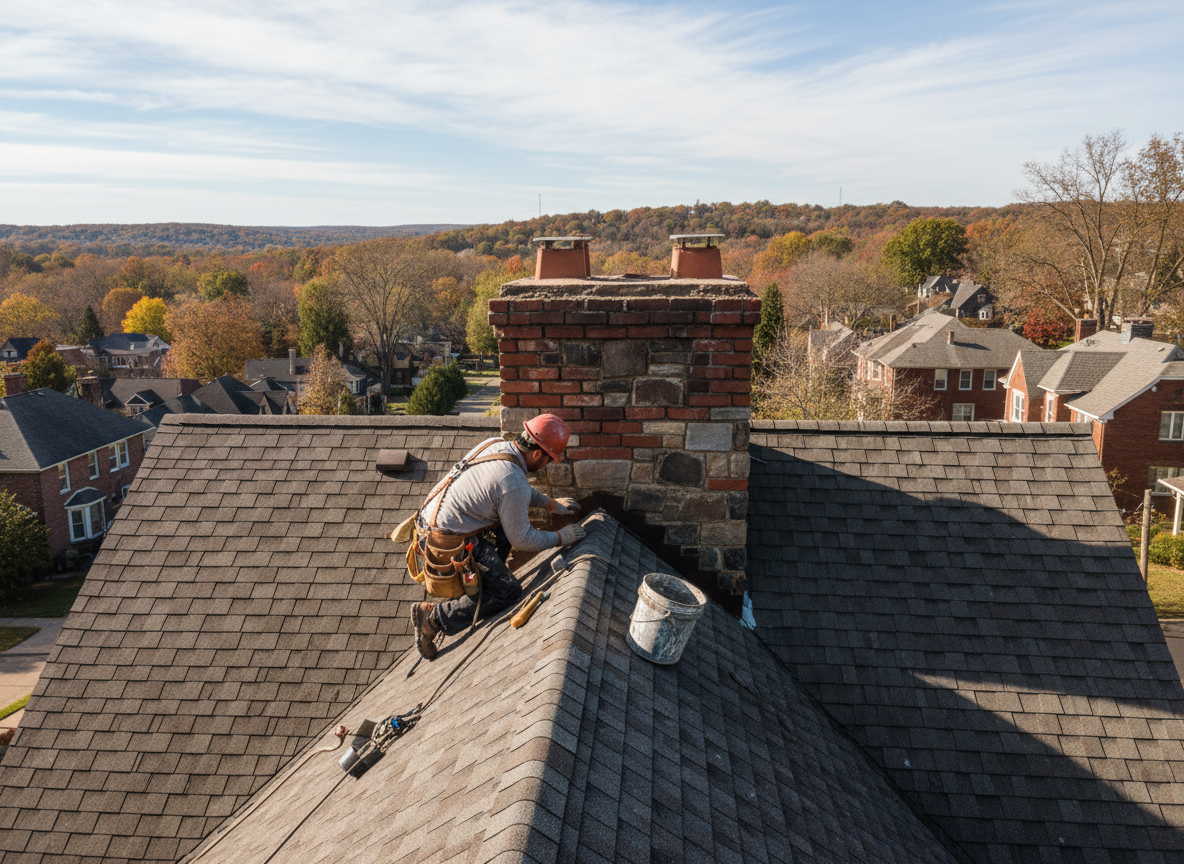
Centerville homes often feature chimneys tied into older rooflines that experience repeated freeze-thaw stress from Ohio winters. Roof chimney repair starts with checking where the chimney meets the roof deck, because water finds its way past deteriorated step flashing or cracked counter flashing on asphalt and slate roofs common in the area. Technicians remove loose masonry, replace corroded metal, and reinstall flashing with proper overlap to direct water away from the roof structure rather than into attic spaces.
Edge cases in Centerville include chimneys that penetrate low-slope sections or additions where roof pitch changes create collection points. These spots require custom-fabricated cricket saddles or extended cricket flashing to prevent ice dams from pushing water behind the chimney. Code notes in Montgomery County require maintaining proper clearance from combustible materials when rebuilding the crown or repointing brick, and any work that alters the flue must preserve draft performance for the connected appliances.
Homeowners frequently discover issues after heavy spring rains when interior ceiling stains appear near the chimney chase. Delaying repair allows water to saturate roof sheathing and rafters, turning a flashing job into structural work. Axis Wrench inspects from both the roof surface and attic, documents every penetration, and restores the roof membrane continuity before completing masonry repairs so the chimney functions without introducing new leak paths.
Technician insight
In Centerville, the thing that catches most people out with roof chimney repair is how the original 1970s-80s step flashing on many two-story brick homes in the area was never extended far enough when the roof was re-covered, so water sneaks in right at the back corners during the first hard freeze after a rain.
Flashing Failure on Split-Level Home
Water stains appeared on the second-floor ceiling after a March storm. Inspection revealed the original flashing had pulled away from the brick on the north side where the addition roof meets the main chimney. Crew removed the old metal, installed new lead-coated copper step flashing with proper overlap, rebuilt the crown slope, and restored the asphalt shingles around the penetration. No further leaks occurred through the next winter.
How it works
- 1
Site Inspection
Technician climbs the roof from 5300 Cornerstone N Blvd base to examine flashing, crown, and brick joints on Centerville properties.
- 2
Damage Assessment
Identify water entry points, measure affected roof sections, and note any masonry movement caused by seasonal cycles.
- 3
Repair Execution
Replace or reseal flashing, repoint or rebuild crown sections, and restore roof membrane around the chimney base.
- 4
Final Verification
Test draft performance and perform a water spray check to confirm no new leak paths remain.
Pricing
Upfront quotes provided after roof inspection; cost depends on extent of flashing replacement and masonry work required.