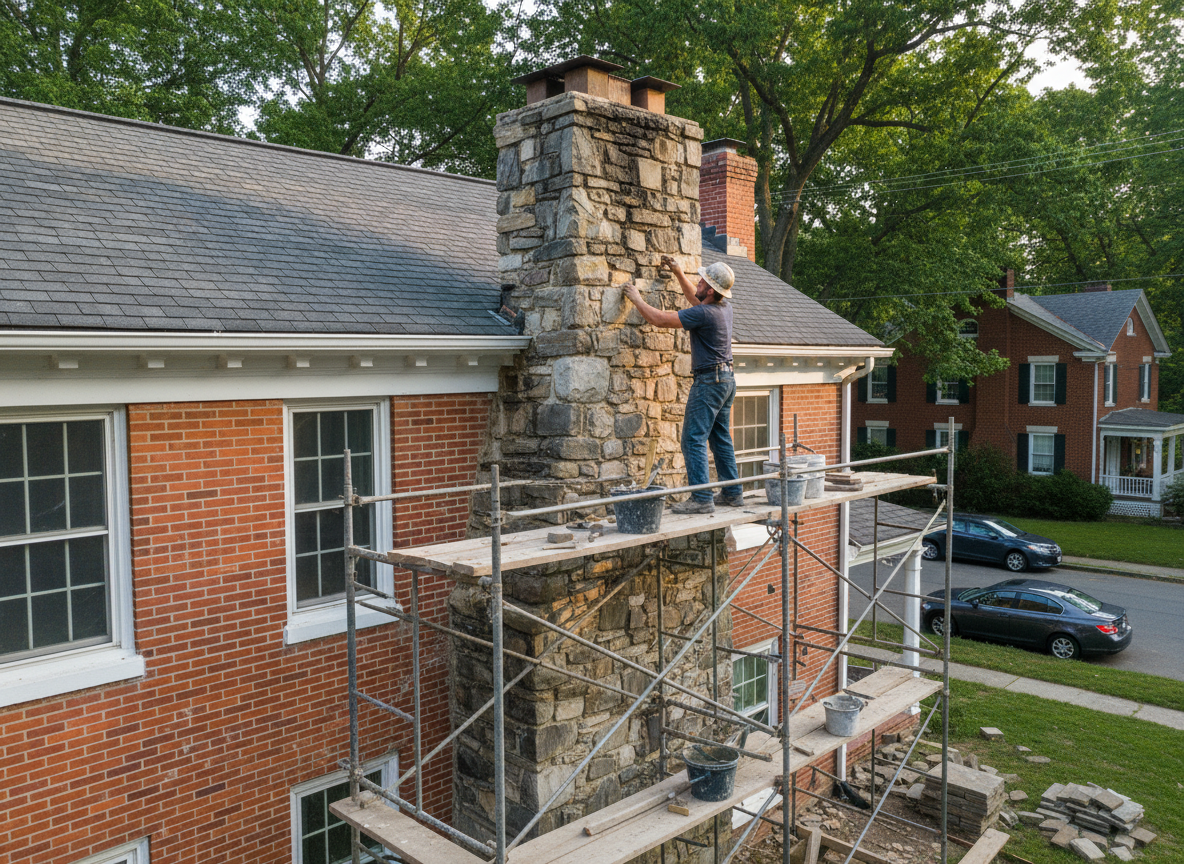
Stone chimneys in Centerville homes often show mortar joint erosion after decades of exposure to Ohio freeze-thaw cycles. Older stonework around the Centerville area, particularly in neighborhoods near the original village core and along larger lots in Montgomery County, frequently develops hairline cracks that allow water infiltration behind the facing. When water freezes, it pushes stones outward and accelerates spalling, especially on the north and west faces that receive less direct sun.
Repair work here requires matching the original limestone or sandstone rather than generic tuckpointing. We remove failed mortar to sufficient depth, install new lime-based mortar compatible with the existing stone, and reset displaced units without introducing modern cement that traps moisture. Flashing integration at the roofline must be checked because many Centerville roofs have been re-shingled over the years without proper step flashing renewal against the stone.
Access challenges appear on two-story homes with steep roofs or limited yard space common in established Centerville subdivisions. Scaffolding setup and material staging must account for mature landscaping and narrow side yards that prevent equipment from reaching the chimney base directly.
Seasonal Considerations
Stone chimney repairs in Centerville are best scheduled before November when temperatures drop consistently below freezing. Delaying work past the first hard freeze risks additional stone movement that turns a repointing job into full stone replacement.
Technician insight
In Centerville, the thing that catches most people out with stone chimney repair is how quickly water gets behind the stone on homes built before the 1980s once the original lime mortar starts washing out, especially on chimneys that sit on the prevailing wind side of the house.
Displaced Stone on Two-Story Chimney
A Centerville homeowner noticed stones shifting on the west face after heavy spring rains. Inspection showed failed mortar joints allowing water behind the stone, pushing several units outward. We removed the loose stones, repointed the full stack with compatible mortar, and reset the displaced units. The chimney was stabilized without requiring full rebuild.
How it works
- 1
Initial Inspection
We examine the full height of the stone chimney from roof to foundation, noting mortar condition, stone alignment, and flashing details.
- 2
Mortar Removal
Failed joints are cut out to adequate depth using hand tools to avoid damaging the surrounding stone.
- 3
Stone Resetting
Displaced stones are removed, cleaned, and reinstalled with new mortar; damaged units are replaced with matching material.
- 4
Flashing and Sealing
Roof-to-chimney transitions are renewed and any crown or cap repairs completed before final curing.
Pricing
Upfront quotes provided after inspection; cost driven by chimney height, extent of stone replacement needed, and roof access.